Module / OFAG
Offline/Air-Gapped Deferred Execution
OFAG preserves provider-controlled meaning when execution and observation are separated.
The gap delays observation.
It does not grant interpretation.
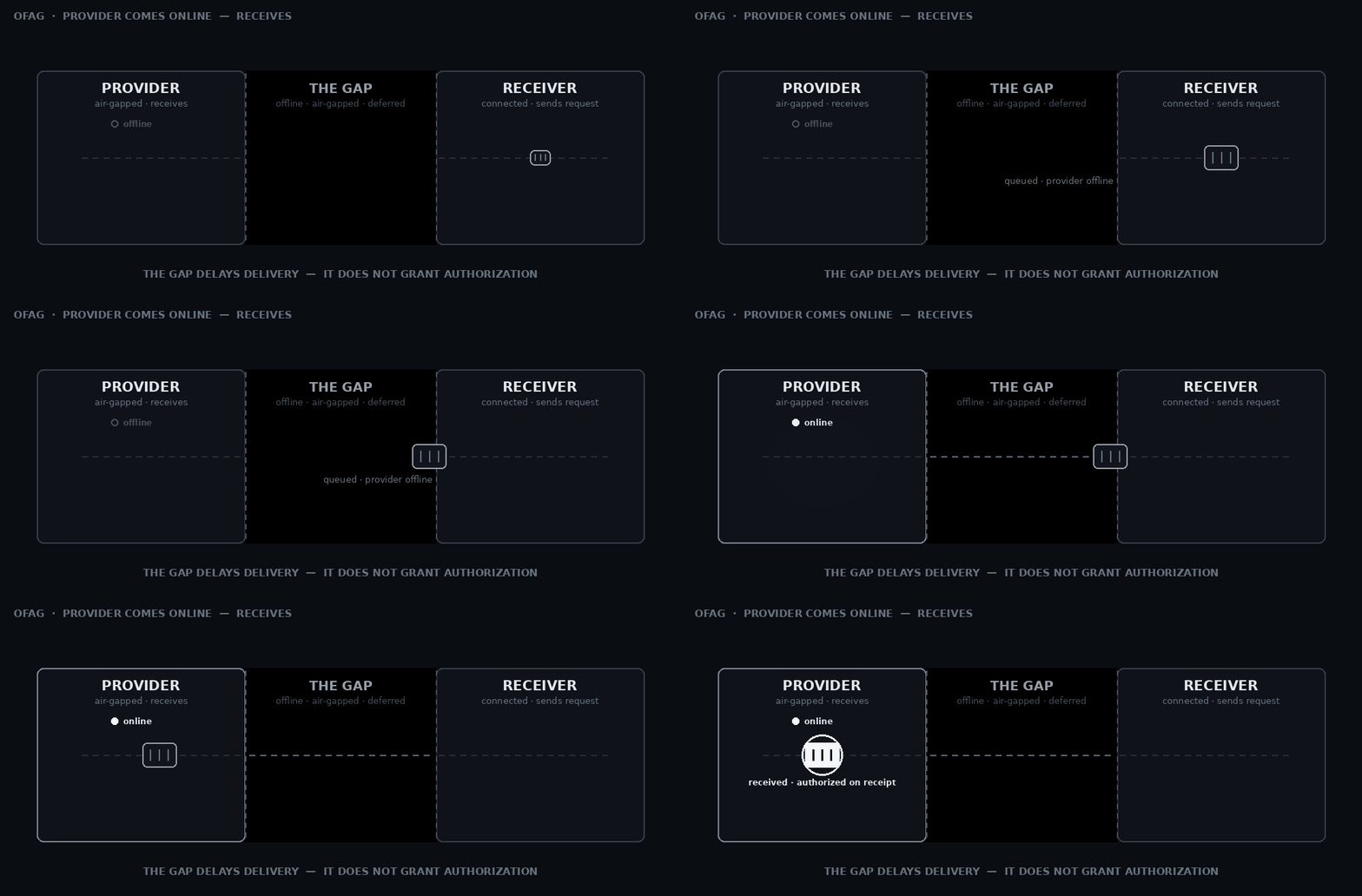
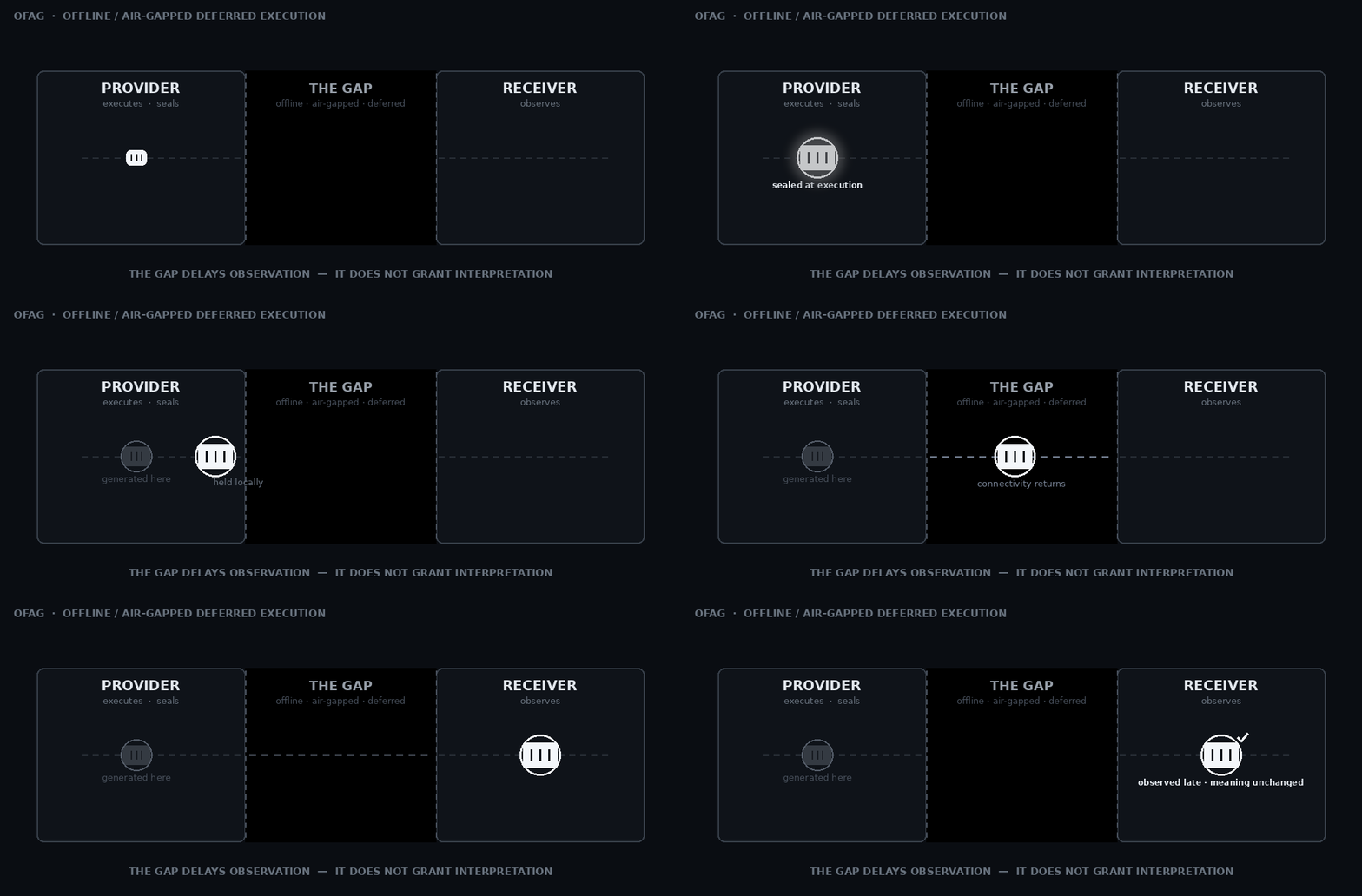
Scenario
A provider-controlled system executes an operation while disconnected. It may be offline, physically air-gapped, intermittently connected, or operating in a deferred-transmission environment.
The provider may generate a verification artifact or execution-related assertion at execution time. That artifact may remain local until connectivity returns or transmission becomes possible.
The risk is not merely delay.
The risk is what delay allows other systems to claim.
A receiver may treat late arrival as evidence of freshness, staleness, ordering, replay, failure, or changed authorization status. An intermediary may try to reconcile, normalize, reorder, or explain what happened during the gap.
OFAG prevents that authority shift. Loss of connectivity affects when a provider-originated assertion is seen. It does not change what the assertion means.
What It Is
OFAG is a constraint framework for provider-controlled execution under offline, air-gapped, intermittent, or deferred-transmission conditions.
It treats delayed artifacts as provider-originated assertions whose meaning is fixed at generation time. A later receiver may observe the artifact, but observation does not create authority to reinterpret it.
The module does not require continuous communication, synchronized clocks, or real-time visibility for provider-controlled meaning to remain stable.
The artifact may arrive late.
The provider remains the source of meaning.
How It Differs
Offline sync tries to reconcile state after connectivity returns.
Replay protection asks whether a message has been reused.
Freshness checking asks whether something is still timely.
Event reconciliation tries to order or normalize delayed records.
Temporal gatekeeping constrains time-based meaning in request handling.
OFAG is narrower. It asks whether delayed observation changes who is allowed to interpret execution.
OFAG does not make arrival time an authorization input. It does not let a receiver infer execution context from delay. It does not let an intermediary become responsible for sequencing, completeness, or after-the-fact reinterpretation.
Late arrival is a transport fact.
The gap does not become authority.
Under Compromise
A compromised intermediary may delay, drop, duplicate, replay, or withhold artifacts. A receiving system may observe artifacts out of order, and connectivity may return unpredictably.
Those conditions can affect availability, reporting, and operational awareness. They should not change execution semantics or convert delayed observation into decision authority.
A delayed artifact may be harder to operationalize.
It should not become easier to reinterpret.
How It Works
A provider-controlled environment executes an operation under provider-defined authorization logic. Execution may occur while connectivity is unavailable, disrupted, or physically isolated.
At execution time, the provider generates one or more verification artifacts or execution-related assertions. Those artifacts are retained locally or in provider-controlled storage until transmission becomes possible.
Later conveyance may occur through relays, queues, gateways, removable media, or restored network connectivity. Those transport mechanisms do not acquire interpretive authority.
They do not assess freshness as authorization. They do not impose ordering as execution meaning. They do not normalize the artifact into a different semantic state.
The receiving system treats the artifact as a provider-originated assertion.
The provider determines what it meant when it was generated.
What to Measure
In an offline or air-gapped architecture, the useful measurement is not simply how long transmission was delayed.
The useful measurement is whether delay changed the authority model.
The relevant boundary questions are:
- Did execution occur under provider-controlled authorization logic?
- Was the artifact generated at execution time under provider control?
- Did delayed arrival change the artifact’s meaning?
- Did any intermediary or receiver infer execution context from timing, order, latency, or observation gaps?
- Did loss of connectivity create a new coordination or validation authority outside the provider?
OFAG reframes offline operation around semantic stability.
The question is not whether the artifact arrived late.
The question is whether lateness changed who was allowed to decide what it meant.
What It Doesn’t Do
OFAG does not require continuous connectivity, real-time observation, synchronized clocks, or ordered arrival.
It does not make intermediaries responsible for sequencing, completeness, freshness, or fixing meaning later.
It does not replace replay protection, logging, monitoring, or provider-side security.
It does not make delayed artifacts automatically trustworthy.
It constrains what delayed conveyance is allowed to change.
Nothing more.
Where It Fits
OFAG is one of eleven modules in the Xer0trust boundary architecture.
The gap delays observation.
It does not grant interpretation.